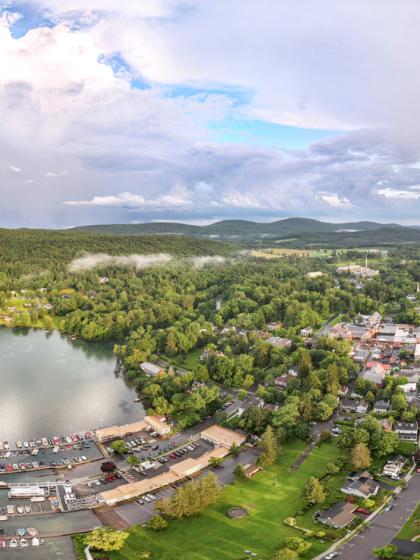

Welcome to the village that won a sixty-year fight with the federal government.
Forty-five minutes from Cooperstown, Gilbertsville is the first village in New York State listed on the National Register in its entirety—all 114 buildings. Here's how to spend a day in it.
August 3, 2026 · This Is Cooperstown · Day Trip
Jump to
Most historic districts are a few blocks a town agreed to protect. Gilbertsville is the other thing. In 1974 the village got its historic district listed on the National Register, and in 1982 that boundary was pushed out to the village line, which made this the first village in New York State listed on the Register in its entirety. Not a corner of it. All of it. One hundred fourteen historic buildings in a village of roughly three hundred people.
The reason it happened is the reason to come see it.
For about sixty years, from before the First World War into the 1970s, the federal government planned a flood control dam at Copes Corners that would have put every street in this village under a lake. Fighting a dam with sentiment does not work. So the village fought it with evidence, documenting itself building by building until the case was unanswerable. The listing was the proof, the dam was never built, and the village that argued for its own life is still here, unstraightened roads and all.
Morning: Start at the Bakehouse
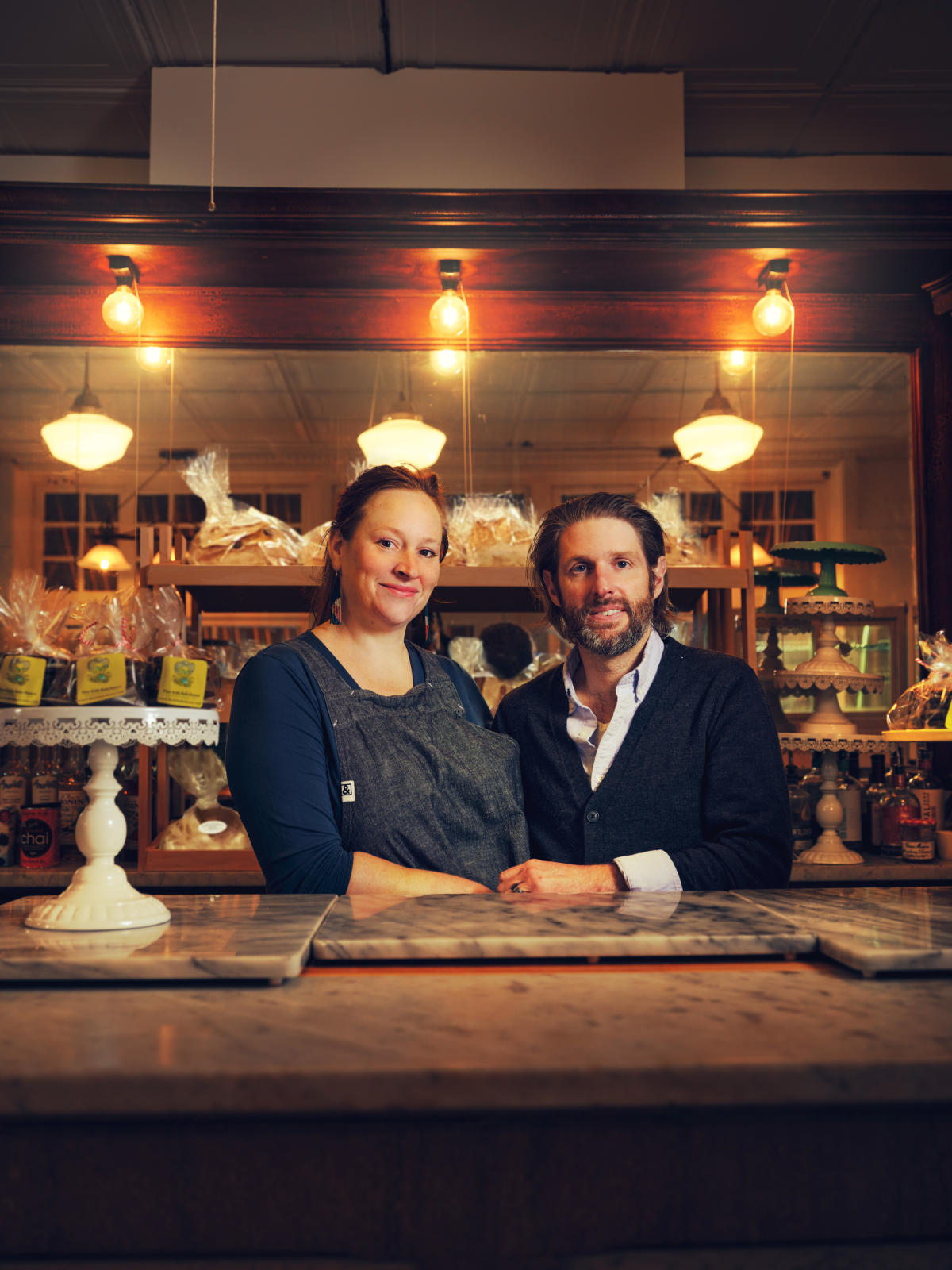
Five Kids Bakehouse at 5 Commercial Street is the village bakery and the de facto morning meeting room. Coffee, and whatever came out of the oven that morning. Open 7 AM to 2 PM, closed Mondays.
Get there early enough that you are not rushing, because the rest of the day is unhurried by design and it helps to start that way. Everyone picks their own thing. Nobody shares.
Late Morning: Walk the Village
Park anywhere. There is no meter in this village and never has been. The center is a loop of about a mile, and the loop itself is the attraction.
Here is the thing to understand before you set out: you are not touring buildings. Almost everything you are looking at is somebody's house, or a volunteer-run hall, or a working business that keeps its own hours. There is no visitor center and no ticket. What there is, is an entire village that never got remodeled, and the pleasure of it is walking through it and looking up.
So look up.
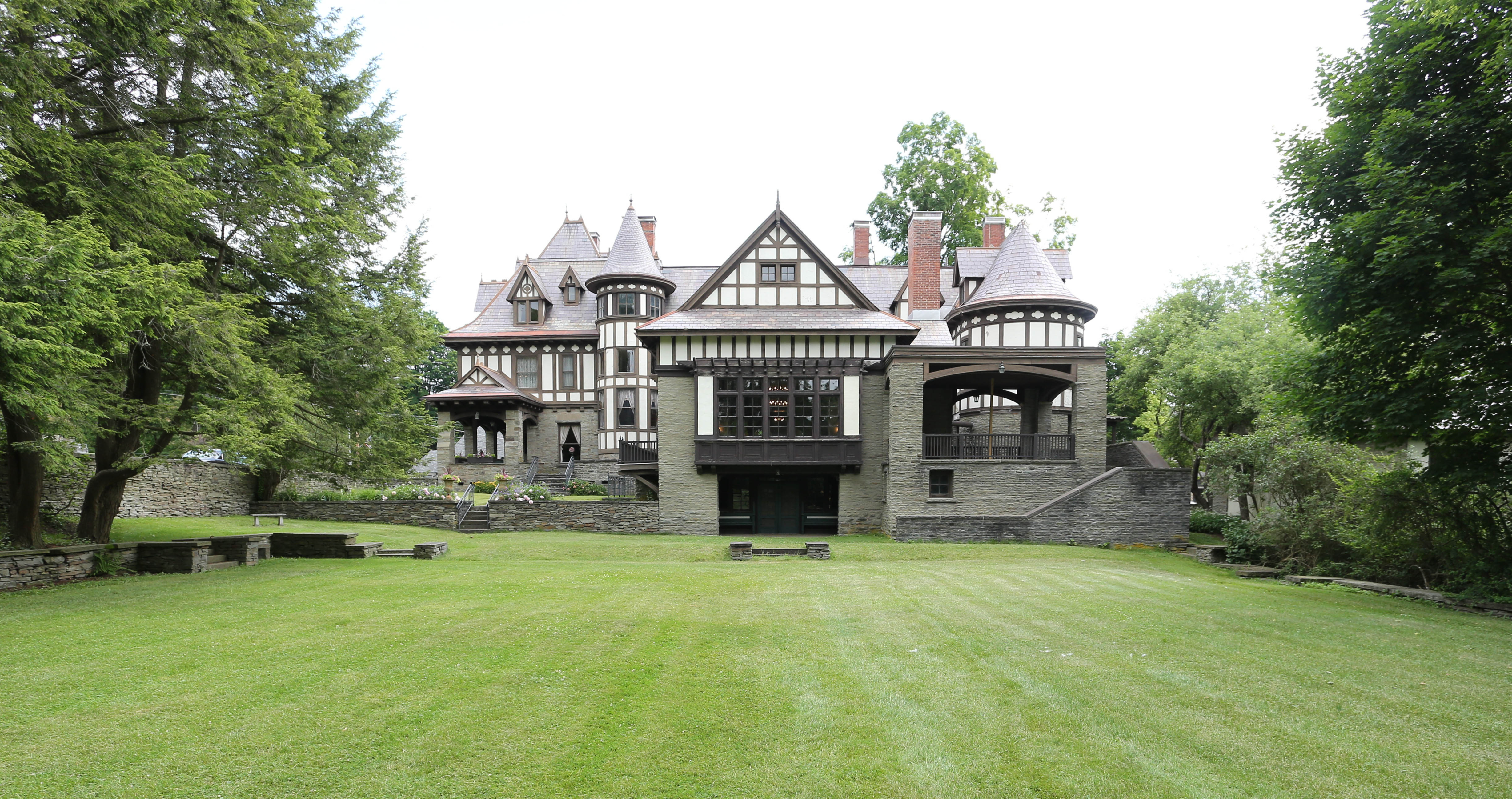
The Major's Inn is the one that stops people. Tudor, enormous, and genuinely out of place in a valley of white clapboard farmhouses. Major James L. Gilbert built it after fire took the family homestead in 1895, it took roughly two decades to finish, and the New York architect Augustus Nicholas Allen drew it. It carries its own National Register listing from 1973, separate from the village's. A volunteer foundation keeps it going and books it for events through the season, so whether the doors are open on the day you come is luck. From the sidewalk it is worth the drive by itself.
The Gilbert Block is the commercial row across the way, a Neo-Tudor three-unit brick building put up between 1893 and 1895 to the design of the Boston architect Henry Forbes Bigelow. It was drawn for a village that was thinking considerably bigger than its population, and it still holds the working center of town.
The Empire House on Marion Avenue has been standing since about 1835 and is where you are coming back for dinner. Note it now, keep walking.
And then the rest of it, which is most of it: the porches, the gardens, the churches, the stone and the clapboard, the houses people actually live in. This is not a preserved village. It is an inhabited one that happens to have kept everything. Somebody will wave at you. Wave back.
Look at the rooflines and the trim. This village was built by carpenters who cut their own patterns and templates so that any piece of any house could be matched and repaired a century later. That habit is why the street still reads as one thing instead of a hundred separate repairs, and once you notice it you cannot stop noticing it.
Before Lunch: Three Shops Worth the Drive
Two of these opened in the last two years, which means the village is not frozen—it is lived in. The stores are in the Gilbert Block or within a block of it.
The Gilbertsville Mercantile stocks what an actual small-town hardware store needs to stock: power tools, plumbing, paint, garden equipment, and the kind of thing you forgot you owned. Hours vary seasonally; call ahead. This is a working store for working people, not a theme park. It works.
Gilbertsville Ceramics is new—opened in 2024 in what used to be empty space. Studio pottery, handthrown, mostly functional ware. The artist is there most days. Open Wednesday through Sunday, 10 AM to 5 PM.
The Book Nook is the one people do not expect: a used-books café in a building that spent forty years as a storage shed. Coffee, pastry from Five Kids, and the kind of book selection a small-town indie would have had in 1992. It is good coffee and good books, which is all any place needs. Open Friday to Sunday, noon to 5 PM.
The Sculpture Park
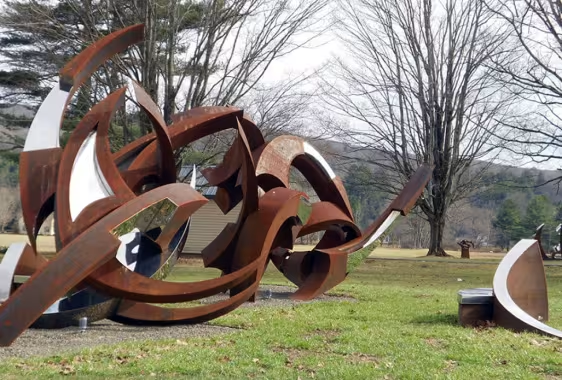
About two miles out of the village center, the Gilbertsville Sculpture Park sits in thirty acres of meadow and field. It opened in 2019 as a way to keep the valley from turning into something else, and it has done that job and then some. The work is contemporary and rotates twice a year, which means it is not the same twice.
There is no admission, no hours, and no fence. The pieces are scattered across the land at a walk. What you see depends on when you go—the same artist changes under different light and seasons. This is not the kind of park you go to check a box. It is the kind you go back to. The gravel lot is at the end of Mill Road off State Route 12.
A sculpture park with no admission in a town of 300 people is the opposite of a growth strategy. It is a survival strategy. Gilbertsville knows exactly what it is and does not want to be anything else.
Out Into the Valley
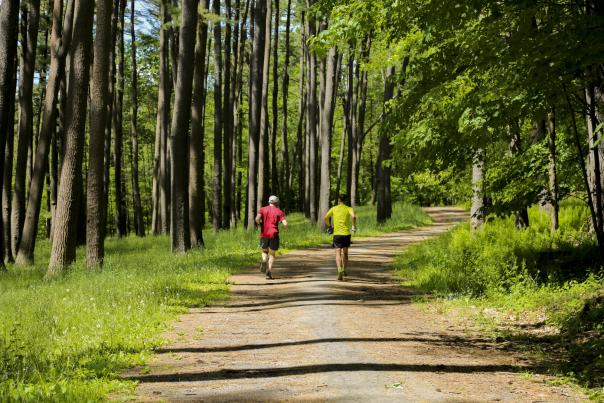
The valley floor below the village used to be the object of every government plan. Now it is just where you walk. The Oaks Creek Trail loops four miles through the bottom, starting from Copes Corners Park, which also has a boat launch and picnic grounds. The creek was part of what the dam would have flooded, which is another reason to be glad the village won.
The whole loop is shaded, flat, and used more by locals than tourists, which is the way to experience it. The parking is free, the trail is free, and the reason nobody advertises this place is because it works better that way. That is the shape of Gilbertsville: the hard-to-reach thing is not a bug. It is why we still look like this.
Dinner at the Empire House
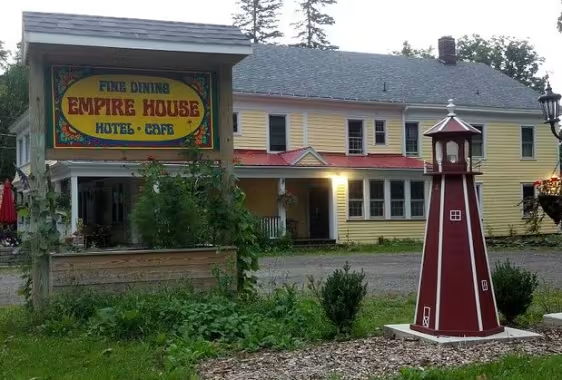
The Empire House on Marion Avenue has been standing since 1835, which means it has been serving dinner for most of that time. The current kitchen runs on the principle that the region grows food and the kitchen should use it. Prime sourcing, restrained technique, and the kind of kitchen that does not need to shout about itself.
Dinner is Thursday through Sunday, starting at 5 PM. Call ahead—they are not running a walk-in service, they are running a kitchen. The wine list is small and knows what it is doing. The same patience that went into carving the trim on the houses went into building this place, and it shows.
Three Days in August
If you are coming in August, do not come alone. The Gilbertsville Farmers Market runs Saturday mornings through the season (roughly June through October), 9 AM to 1 PM, on the village green. It is the kind of farmers market where the farmers actually live there and the customers are people they know. Expect vegetables, fruit, cheese, baked goods, and the occasional artist. It is not a simulation of a farmers market. It is the thing itself.
GEM Music Fest runs in mid-August and brings in musicians who play chamber music, folk, and jazz in venues all over the village—the churches, the halls, people's living rooms. It is small and it is serious. Tickets sell out. Program and tickets through the festival website.
Know Before You Go
- Distance: 45 minutes from Cooperstown, 30 minutes from Oneonta.
- Parking: Free. Park anywhere on any street. There has never been a meter.
- Summer hours: Most shops close Monday and Tuesday. Check ahead if it is off-season.
- Rain plan: The Major's Inn, the Book Nook, and the Bakehouse are your indoor anchors. Everything else is a walk.
- Photography: The village is people's home. Photograph the buildings, not the people.
- Camping: Copes Corners Park has sites if you want to make it a weekend.
- Phone service: It exists. It works.
- What there is not: No chain stores. No cell tower signs. No chain restaurants. No outlet mall. No wifi at your hotel because there is no hotel—stay in Cooperstown or Oneonta and drive in.
By Aidan Woishnis
Mayor of the Village of Gilbertsville. Hours and business information verified August 2026.