


Kingfisher Tower at 150
Kingfisher Tower is a 60-foot Gothic Revival stone "folly" on the eastern shore of Otsego Lake at Point Judith, two miles north of Cooperstown. Edward Clark — co-founder of the Singer Sewing Machine Company — commissioned it in 1876. The architect was Henry J. Hardenbergh, then 29 years old. Clark would go on to commission Hardenbergh to design the Dakota on Central Park West. Hardenbergh would later design the Plaza Hotel and the original Waldorf-Astoria. Cooperstown got there first. The tower is still owned by Clark’s descendants, sits on private land, and is best seen from the water — by boat, by kayak, or from the deck of the Glimmerglass Queen. It turns 150 in 2026.
There’s a 60-foot stone castle on the eastern shore of Otsego Lake that has no purpose. It never had one. It was built in 1876 by a man who had more money than most American cities, designed by an architect who would go on to shape the New York skyline, and its entire reason for existing was to make the lake more beautiful.
It worked.
Kingfisher Tower, named for the belted kingfisher, the blue-crested bird that still hunts the shallows of Otsego Lake, has been the most photographed structure on the water for a century and a half. It has appeared on postcards, in paintings, in a silent film, and in the peripheral vision of every boater, paddler, and lakeshore daydreamer since Ulysses S. Grant was president. This year, it turns 150.
The Man Who Built It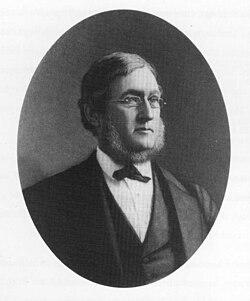
Edward Cabot Clark didn’t set out to build a castle. He set out to build a life in Cooperstown.
Clark was a lawyer from Greene County who married Caroline Jordan, the daughter of his Cooperstown-based law partner Ambrose Jordan, in 1835. In 1849, he met a client named Isaac Merritt Singer — broke, brilliant, and in possession of an invention he couldn’t afford to patent. Clark took the case. In lieu of legal fees, Singer gave him three-eighths of the company. Clark went on to co-found the Singer Sewing Machine Company, invent the installment payment plan (literally, he’s the guy), and build one of the largest personal fortunes in 19th-century America.
He could have gone anywhere. He chose Cooperstown.
Clark bought the “Apple Hill” estate on the shore of Otsego Lake in 1856 and built “Fernleigh,” a stone country house, in 1869. He bought 500 more acres in 1874. He built cottages, farmhouses, a hotel, and a hospital. He treated the village the way his father-in-law had, as a civic project, not just a summer address.
And then, in 1876, the country was still in the long, grinding aftermath of the Panic of 1873. People in the Cooperstown area needed work.
Clark’s response: hire a young architect. Build something beautiful. Put people on a payroll.
The Architect Who Designed It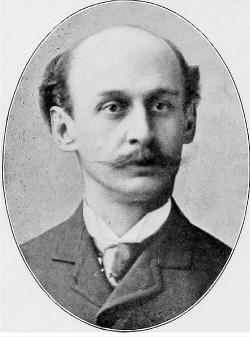
The young architect was Henry Janeway Hardenbergh. He was 29 years old.
Clark was Hardenbergh’s most important early patron - the client who gave him room to work, to experiment, to build something no one had asked for. Kingfisher Tower was their first major collaboration: a miniature castle in the style of the 11th and 12th centuries, built of stone quarried from the shores of Otsego Lake, rising from a foundation at the water’s edge so it appeared to grow directly out of the water.
A description published in Cooperstown’s Freeman’s Journal on September 7, 1876 detailed the tower:
“Kingfisher Tower is a miniature castle, after the style of the eleventh and twelfth centuries. The tower is about 20 feet square at the base, and at a height of five feet above the water is the main floor. The walls of the structure are most solidly built of stone from the shores of the Lake, the roofs covered with earthen tiles. The main windows are brilliant with stained glass, and each bears in the center a heraldic shield.”
— The Freeman’s Journal, Cooperstown, September 7, 1876, page 3
It came with a drawbridge. A portcullis. Stairs to a platform at the top, where you could see the entire panorama of the lake and county through narrow loopholes pierced in the walls. A bartizan — a small overhanging turret — crowned one corner with a conical roof.
It was, in the architectural vocabulary of the era, a folly: a structure built purely for ornament, for atmosphere, for the pleasure of looking at it. Clark was criticized for the indulgence. Most people, the newspaper noted, didn’t see the point.
They see it now.

Kingfisher Tower — Point Judith, one of the most prominent, as it is one of the loveliest of the many diminutive scapes that jut out from the shores of our lake presents to the discriminating lover of nature features of greater beauty and opportunities for embellishment scarcely afforded by any of the others. Appreciating this fact Mr Edward Clark almost immediately after purchasing the property caused to be erected the picturesque Cottage in the manner of the Swiss Chalets to be used as a rustic retreat or more literally a private picnicking house. Nestling among the trees it gave a suggestion of retirement and quiet, adding to the peaceful character to the spot it ornamented, while its varied detail and bright, though not gay, coloring harmonized with the infinite forms and colors of Nature’s work. The design, however, was not complete until the erection of the structure just finished, which is to be known hereafter as Kingfisher Tower. This consists of a miniature castle, after the style of the 11th and 12th centuries, standing upon the extremity of the point and rising out of the water to a height of nearly sixty feet. It forms an objective point in the scene presented by the lake and surrounding hills; it adds solemnity to the landscape, seeming to stand guard over the vicinity while it gives a character of antiquity to the lake a charm but which we cannot help being impressed in such scenes. Some apprehension was felt lest a proper foundation could not be secured strong enough to resist the force of the ice in winter. This has been accomplished by driving a number of piles on which a grillage was formed of heavy timber, filled with concrete and on the solid masonry was laid several feet in height. The castle is about twenty feet square at the base and at the height of five feet above the water is the main floor. Ten feet above this is the first platform provided with ramparts and machiolated parapets. Above this stage the tower alone rises, eight feet square crowned with a pyramidal roof pierced with a window on each side, the walls bearing at one angle a bartizan with conical roof. The walls of the structure are mostly solid built of stone from the shores of the lake, the roof covered with earthen tiles the bright red color of which contrast finally with the sober gray of the stone. The main windows are brilliant with stained glass and each bears in the center a heraldic shield. A drawbridge connects the castle with the causeway running to the mainland while a portcullis can be lowered to close the entrance. The drawbridge, portcullis and doors are all of solid oak. Stairs lead to the highest platform of the Tower and from numerous openings and loopholes with which the walls are pierced a fine panoramic view of the lake and country can be obtained. The effect of the structure is that of a picture from medieval times and its value to the lake is very great. Mr Clark has been led to erect it simply by a desire to beautify the lake and add an attraction which must be seen by all who traverse the lake or drive along its shores. Those whose minds can rise above simple notions of utility to appreciation of art joined to nature will thank him for it. The original design for Kingfisher Tower was selected from several drawn by Henry J Hardenberg, Esq, architect, and the entire work upon it has been executed under his supervision.
From Otsego Lake to Central Park West
What happened next is the part that connects a 60-foot stone tower on a lake in Central New York to the skyline of Manhattan.
After Kingfisher Tower, Clark commissioned Hardenbergh again — this time for an apartment building on a plot of land so far from fashionable New York that people called it “Clark’s Folly.” The building was nicknamed for its remoteness: the Dakota, as in the Dakota Territory. Construction started in 1880. Clark died in Cooperstown in 1882 before it was finished. The Dakota was completed in 1884, bequeathed to Clark’s 12-year-old grandson Edward Severin Clark, and went on to become one of the most famous residential buildings in the world.
Hardenbergh, launched by the Clark commissions, went on to design the Plaza Hotel. The original Waldorf-Astoria. The Willard InterContinental in Washington, D.C. The Copley Plaza in Boston.
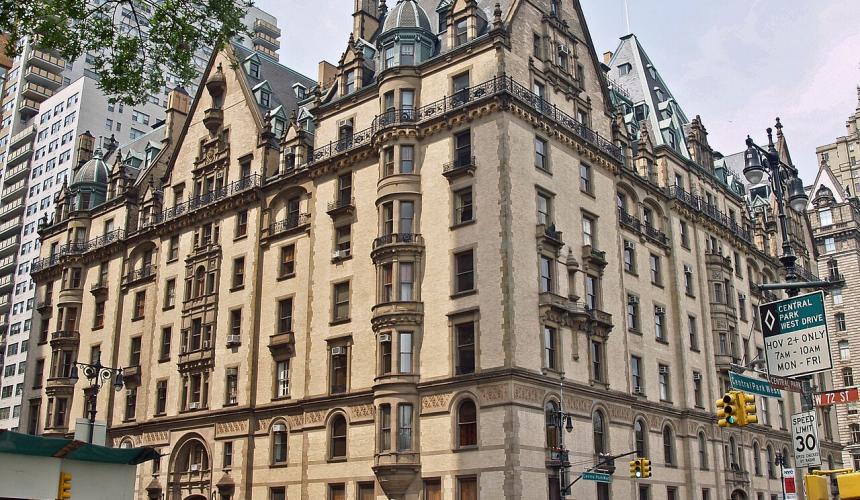
The Dakota, 1 West 72nd Street, New York City — designed by Henry J. Hardenbergh for Edward Clark. Photo: David Shankbone
It all started here. On a lake in Cooperstown. With a man who wanted to give his neighbors a paycheck and his lake a castle.
The Family Legacy
The Clark family’s mark on Cooperstown didn’t end with Edward. His grandson Edward Severin Clark - aka “The Squire” - built The Otesaga Resort Hotel, the Mary Imogene Bassett Hospital (now Bassett Healthcare Network), and the buildings that became Fenimore Art Museum and Fenimore Farm & Country Village. Edward Severin’s brother Stephen C. Clark Sr. was instrumental in establishing the National Baseball Hall of Fame & Museum.
The tower, the hotel, the hospital, the art museum, the farm museum, the Hall of Fame - every thread leads back to the same family. And the family’s story in Cooperstown starts with the same impulse: build something worth looking at.
Kingfisher Tower is still owned by Clark’s descendants. It sits on private land. You can’t go inside. But 150 years later, you can still do exactly what Edward Clark intended: look at it from the water and think, that’s something.
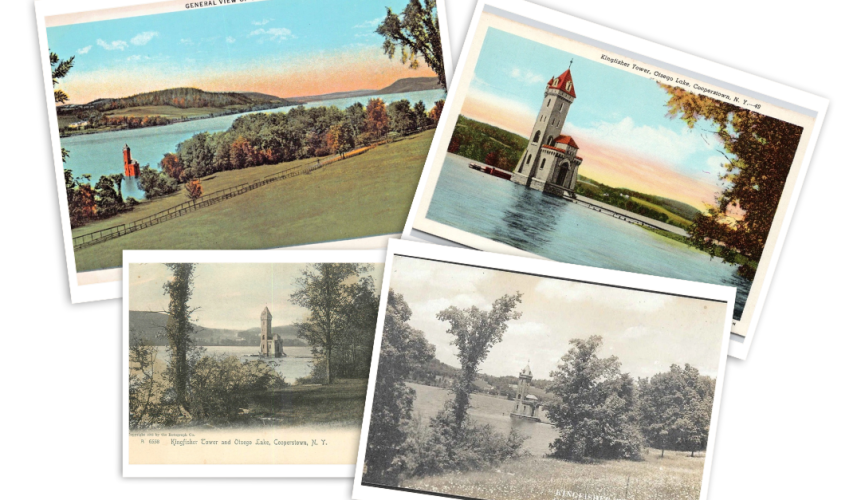
Kingfisher Tower, Otsego Lake — vintage postcards
A Movie Set Before There Were Movie Sets
Thirty-five years after Kingfisher Tower was built, the Vitagraph Film Company — the largest motion picture producer in the world at the time — came to Otsego Lake to film an adaptation of James Fenimore Cooper’s The Deerslayer. It was 1911. They shot the silent film on location, with local laborers building set pieces on the lake and Kingfisher Tower in the backdrop. The film was released nationally in 1913, and local photographers sold postcards of production scenes — one of the earliest instances of Cooperstown tourism driven by visual media.
Cooper wrote Otsego Lake into American literature. Vitagraph put it on film. Kingfisher Tower was already there, waiting.
How to See It
Kingfisher Tower stands at Point Judith on the eastern shore of Otsego Lake, two miles north of Cooperstown. It is private property — no trespassing, no landing, no interior access. The best way to see it is from the water.
The Glimmerglass Queen runs narrated cruises on Otsego Lake seasonally and the captain points out Kingfisher Tower along the route. Tickets go on sale 15 minutes before departure.
Paddling Otsego Lake puts you at water level with the tower — the angle that makes the castle look like it’s rising straight out of the lake.
The park at the southern tip of Otsego Lake offers a distant but clear view of the tower from shore, along with the full sweep of the lake.
Kingfisher Tower isn't really visible from the road on either side of the lake unless you're staying at one of the amazing homes or motels. But it is visible from the deck at Blue Mingo Grill, sitting directly across the water on the western shore. Order the pan-seared trout, gaze across Otsego Lake, and there it is - a 60-foot stone castle staring back at you in all her glory. Not a bad dinner companion.
150 Years and Still No Purpose
In 1876, people thought Edward Clark was wasting his money on a vanity project. In 2026, that vanity project is the most recognized landmark on one of the most beautiful lakes in New York State. It’s appeared on postcards, in paintings, in embroidery, on t-shirts sold on Etsy. Even on our very own official Cooperstown Guide. It has been photographed in every season, from every angle, by everyone from professional artists to families in rented pontoon boats.
It has never served a single functional purpose. And it has never stopped working.
Happy 150th, Kingfisher Tower.
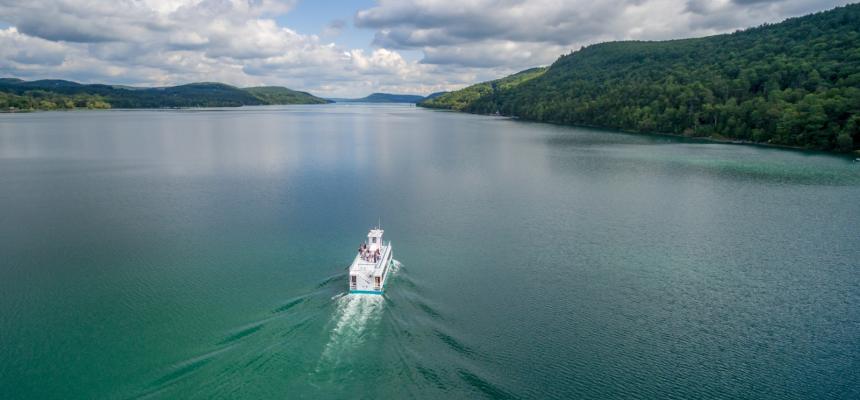
Book a cruise on the Glimmerglass Queen or launch a kayak from Cooperstown and paddle north along the eastern shore. Kingfisher Tower is two miles north of the village at Point Judith.
Explore Otsego LakeFrequently Asked Questions
What is Kingfisher Tower in Cooperstown?
Kingfisher Tower is a 60-foot Gothic Revival stone tower on the eastern shore of Otsego Lake, two miles north of Cooperstown, New York. It was built in 1876 by Edward Clark, co-founder of the Singer Sewing Machine Company, and designed by architect Henry J. Hardenbergh, who later designed the Dakota and the Plaza Hotel in New York City. It is a folly — a purely ornamental structure — and has been the most photographed landmark on Otsego Lake for 150 years.
Can you go inside Kingfisher Tower?
No. Kingfisher Tower sits on private land still owned by descendants of the Clark family. The interior is not open to the public, and visitors cannot land at or trespass on the property. The tower is best viewed from the water by boat cruise, kayak, or paddleboard, or from a distance at Lakefront Park and along County Highway 31.
Who built Kingfisher Tower?
Kingfisher Tower was commissioned by Edward Cabot Clark (1811–1882), a lawyer who co-founded the Singer Sewing Machine Company and invented the installment payment plan. Clark was also the grandfather of Stephen C. Clark Sr., who helped establish the National Baseball Hall of Fame & Museum in Cooperstown in 1939.
Who designed Kingfisher Tower?
Kingfisher Tower was designed by Henry Janeway Hardenbergh (1847–1918), an American architect who was 29 years old at the time. Clark was Hardenbergh’s most important early patron. After Kingfisher Tower, Hardenbergh designed the Dakota apartment building on Central Park West (1884), the Plaza Hotel (1907), the original Waldorf-Astoria, and numerous other landmark buildings across the United States.
What is the connection between Kingfisher Tower and the Dakota in New York City?
Both were commissioned by Edward Clark and designed by Henry J. Hardenbergh. Kingfisher Tower (1876) was their first major collaboration. Clark then hired Hardenbergh to design the Dakota apartment building at 1 West 72nd Street in Manhattan. Construction began in 1880 and was completed in 1884, two years after Clark’s death. The Dakota became one of the most famous residential buildings in the world.
How do you see Kingfisher Tower on Otsego Lake?
The best way to see Kingfisher Tower is from the water. The Glimmerglass Queen runs narrated boat cruises on Otsego Lake seasonally and passes by the tower. You can also kayak or paddleboard north along the eastern shore from Cooperstown. From land, Lakefront Park at the southern end of the lake offers a distant view, and County Highway 31 on the eastern shore provides glimpses, especially when the trees are bare.
Why is it called Kingfisher Tower?
The tower is named for the belted kingfisher, a blue-crested bird native to the shores of Otsego Lake. The belted kingfisher hunts by diving into the water from overhanging branches and is a common sight along the lake’s shoreline.
How old is Kingfisher Tower?
Kingfisher Tower was built in 1876 and turns 150 years old in 2026. It is part of the Glimmerglass Historic District, which was designated in 1999.
Where is Kingfisher Tower located?
Kingfisher Tower is located at Point Judith on the eastern shore of Otsego Lake in Otsego County, New York, approximately two miles north of the village of Cooperstown. It is not accessible by land as it sits on private property.